


Union Budget 2026-27: The Complete Blueprint for a ‘Viksit Bharat’
February 1, 2026 | by Amit Sharma
The Union Budget 2026-27 is officially India’s “Viksit Bharat” roadmap. Presented by Finance Minister Nirmala Sitharaman, this year’s financial statement shifts gears from recovery to acceleration, underpinned by a massive ₹12.2 lakh crore infrastructure push and the introduction of the New Income Tax Act, 2025.
If you are looking for a high-level summary of how the 2026 budget affects your wallet, business, and investments, this is your definitive guide.
At A Glance: Key Budget 2026 Highlights
- Fiscal Deficit: Lowered to 4.4% (Targeting fiscal health).
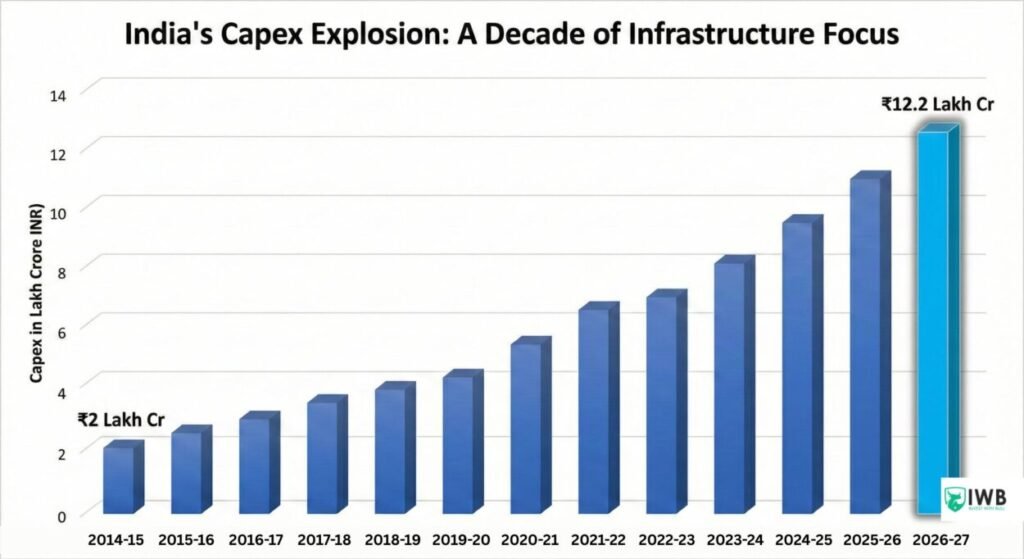
- Capex Spending: Record ₹12.2 lakh crore (approx. 9% hike).
- Biggest Reform: Replacement of the 1961 Tax Act with the New Income Tax Act, 2025.
- Infrastructure: 7 new High-Speed Rail Corridors announced.
- Theme: “3 Kartavyas” (Growth, Aspirations, Inclusivity).
1. The “3 Kartavyas” Framework
The government has anchored the entire budget on three “Kartavyas” (Responsibilities) aimed at driving India toward its 2047 goals:
- Accelerating Economic Growth: Boosting productivity and protecting the economy from global recessions.
- Fulfilling Aspirations: Skill development and capacity building for the youth.
- Inclusivity (Sabka Saath): Ensuring benefits reach farmers, women, and the marginalized.
2. The New Income Tax Act, 2025: What Changes?
The most discussed announcement is the scrapping of the six-decade-old tax code.
- Effective Date: April 1, 2026.
- The Goal: To reduce litigation and simplify language for the common taxpayer.
- Key Change: Share buybacks will now be taxed as capital gains, closing a major loophole.
Read More: Want the full breakdown of slabs and deductions? Read our deep dive: Decoding the New Income Tax Act 2025
3. Infrastructure: The ₹12.2 Lakh Crore Push
The government is betting big on physical assets to drive GDP. The Capital Expenditure (Capex) has risen significantly, aiming to create a multiplier effect on employment.
The High-Speed Rail Revolution
A major win for connectivity, the budget lists 7 new High-Speed Rail Corridors:
- West: Mumbai – Pune
- South: Pune – Hyderabad, Hyderabad – Bengaluru, Hyderabad – Chennai, Chennai – Bengaluru
- North/East: Delhi – Varanasi, Varanasi – Siliguri
Read More: See the full list of railway projects and stock impacts here: The 2026 Infra & Railway Report
4. Sector Winners & Losers
(Quick verdict for investors)
| Sector | Verdict | Why? |
| Infrastructure | Super Bullish | ₹12.2L Cr Capex & New Rail Corridors. |
| Tech (IT) | Bullish | Rationalized tax norms for software/R&D. |
| Agriculture | Positive | Focus on high-value farming & integrated development. |
| Chemicals | Positive | New state-level chemical parks announced.(*) |
| Automobile | Neutral | Indirect benefits from roads; no direct EV subsidy hike. |
*(The specific announcement was for three dedicated chemical parks in every state using a “plug-and-play” model. This is a massive scale-up from previous years and justifies your “Positive” verdict even more strongly.)
Deep Dive: Explore the Budget by Sector
Don’t stop at the summary. Choose your area of interest below for a detailed breakdown.
📈 Investors & Markets
Market Reaction & Stock Picks How will the ₹12.2L crore capex impact the Nifty50? We analyze the immediate market reaction and identify the specific stocks poised to benefit from the new infrastructure and chemical sector announcements.
💰 Personal Finance & Tax
The New Income Tax Act 2025 Decoded Confusion about the new tax code replacing the 1961 Act? We break down the “Reform Express,” the new capital gains rules for share buybacks, and what the April 1, 2026 effective date means for your salary and savings.
🏥 Healthcare & Science
Heal in India: The R&D Roadmap Beyond hospitals, where is the money going? A look at the government’s push for medical research, the “Anusandhan” fund, and the new capacity-building measures for the pharmaceutical industry.
🌾 Agriculture & Rural Economy
Beyond the Farm Laws: Modernizing Agri From “Viksit Bharat” to the village level. Discover the new schemes for integrated agricultural development, high-value farming incentives, and how digital public infrastructure is reaching the rural economy.
💻 Technology & Startups
AI, Deep Tech & The Startup Ecosystem With a rationalized tax regime for software and a focus on “Make AI in India,” this budget is a win for the digital economy. We explore the incentives for deep tech startups and the expansion of the digital infrastructure.
Frequently Asked Questions (FAQs)
When does the New Income Tax Act 2025 come into effect?
The New Income Tax Act, 2025 will be effective starting April 1, 2026. It replaces the Income Tax Act of 1961.
What is the capex target for Budget 2026-27?
The government has set a capital expenditure (capex) target of ₹12.2 lakh crore for the financial year 2026-27.
Which new high-speed rail routes were announced in Budget 2026?
Seven routes were announced, including Mumbai-Pune, Delhi-Varanasi, and the Hyderabad-Bengaluru corridor.
How does Budget 2026 impact the middle class?
In the actual 2026 speech, the Finance Minister explicitly stated there are no changes to income tax rates or slabs for this year. The “New Income Tax Act 2025” is a structural rewrite for simplification (reducing sections from 819 to 536), but the monetary slabs themselves haven’t moved. Highlighting this distinction helps manage reader expectations.

RELATED POSTS
View all


The 2026 Infra & Railway Report: High-Speed Corridors and Market Impact
February 1, 2026 | by Amit Sharma

Budget 2026 Tech & Startups: Powering the AI & Deep Tech Revolution
February 1, 2026 | by Amit Sharma
New Income Tax Act 2025 & Union Budget 2026: The Comprehensive Guide to India’s Tax Revolution
February 3, 2026 | by Amit Sharma