


Budget 2026: The Roadmap for ‘Heal in India’ & Science R&D
February 1, 2026 | by Amit Sharma

A developed nation cannot be built on borrowed technology or a fragile healthcare system. In Union Budget 2026-27, the government has acknowledged this reality, shifting the focus from “treating illness” to “fostering innovation.”
While the headline allocation for healthcare has seen a steady rise, the real story lies in the Science & Technology allocation—specifically the operationalization of the ‘Anusandhan’ National Research Fund.
Here is how the 2026 budget aims to transform India into a global pharmacy and research hub.
1. The “Anusandhan” Era Begins
(Target Keyword: Anusandhan National Research Fund)
The highlight of the Science budget is the full-scale launch of the “Anusandhan” corpus.
- The Corpus: A massive ₹1 Lakh Crore pool (interest-free loans) is now live to encourage the private sector to scale up research and innovation.
- The Goal: To move India from “adopting technology” to “generating technology” in sunrise sectors like Deep Tech, Bio-Pharma, and Defense.
- Impact: This is a game-changer for R&D-heavy companies that previously struggled with the high cost of capital.
2. “Heal in India”: Infrastructure & Education
The budget continues the mission to make India a medical tourism destination (“Heal in India”) while strengthening domestic care.
- New Nursing Colleges: Co-location of 157 new nursing colleges with existing medical colleges is being fast-tracked to fix the global shortage of nurses.
- Sickle Cell Elimination: The mission to eliminate Sickle Cell Anemia by 2047 receives a funding boost for screening 7 crore people in tribal areas.
- Cervical Cancer: Encouragement of vaccination for girls aged 9-14 remains a key preventive health priority.
3. Pharma & MedTech: Ending Import Dependence
(Target Keyword: Medical device industry budget)
India is known as the “Pharmacy of the World” for generics, but we still import high-end medical devices (like MRI machines and stents).
- MedTech Parks: The budget proposes new incentives for manufacturing high-end medical devices domestically.
- Pharma PLI: Continued support for the Production Linked Incentive (PLI) scheme to boost the manufacturing of Key Starting Materials (KSMs) and Active Pharmaceutical Ingredients (APIs), reducing reliance on Chinese imports.
4. Visualizing the R&D Shift
To understand why the government is obsessed with R&D, look at this comparison of Gross Expenditure on R&D (GERD) as a percentage of GDP. India aims to cross the 1% mark rapidly.
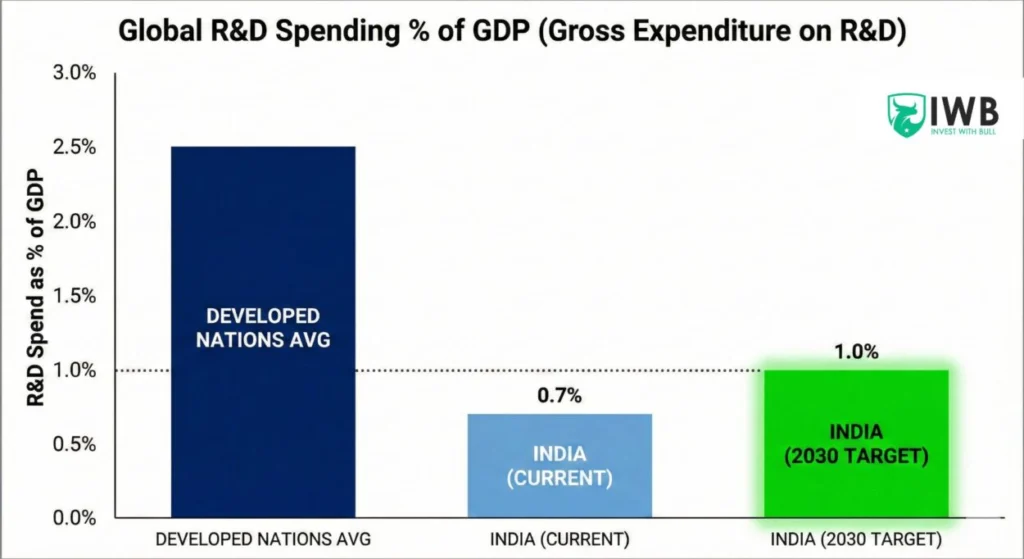
Image Metadata:
- Alt Text: A bar chart comparing R&D spending (GERD) of Developed Nations (2-3%) vs India’s current (<0.7%) and India’s 2030 Target (>1%).
- Caption: The Gap: India’s “Anusandhan” push aims to bridge the R&D deficit against global peers.peers.
5. Investment Outlook: Who Wins?
If you are an investor, here is how to read these announcements:
5. Investment Outlook: Who Wins?
If you are an investor, here is how to read these announcements:
| Segment | Outlook | Top Picks / Watchlist |
| Hospitals | 🟢 Bullish | Benefit from “Heal in India” tourism & insurance penetration. |
| Diagnostics | 🟡 Neutral | High competition, but preventative health focus helps volumes. |
| Pharma (CDMO) | 🟢 Bullish | Contract research firms benefit directly from the R&D push. |
| MedTech | 🟢 Positive | Companies making consumables and devices domestically. |
Frequently Asked Questions (FAQs)
What is the ‘Anusandhan’ National Research Fund announced in Budget 2026?
The ‘Anusandhan’ National Research Fund is a massive ₹1 Lakh Crore corpus established by the government. It provides long-term, interest-free loans to the private sector to encourage research and innovation in sunrise domains like Deep Tech and Bio-Pharma.
How does Budget 2026 support the ‘Heal in India’ initiative?
The budget supports ‘Heal in India’ by funding the co-location of 157 new nursing colleges with existing medical colleges to address the global nursing shortage. It also boosts funding for missions to eliminate diseases like Sickle Cell Anemia.
What are the benefits for the Pharma and Medical Device sectors in this budget?
The budget aims to reduce import dependence by offering incentives for setting up MedTech Parks for high-end device manufacturing. It also continues the Production Linked Incentive (PLI) scheme for key starting materials (KSMs) and APIs in the pharma sector.

RELATED POSTS
View all


New Income Tax Act 2025 & Union Budget 2026: The Comprehensive Guide to India’s Tax Revolution
February 3, 2026 | by Amit Sharma

How Much More Money Will You Take Home After Budget 2026? New Income Tax Rules Explained for Salaried Indians
February 23, 2026 | by Amit Sharma

The 2026 Infra & Railway Report: High-Speed Corridors and Market Impact
February 1, 2026 | by Amit Sharma