


Technical Guide: RBI’s New Credit Card Rules 2026 & Impact
Published: 15/02/2026 | by Amit Sharma
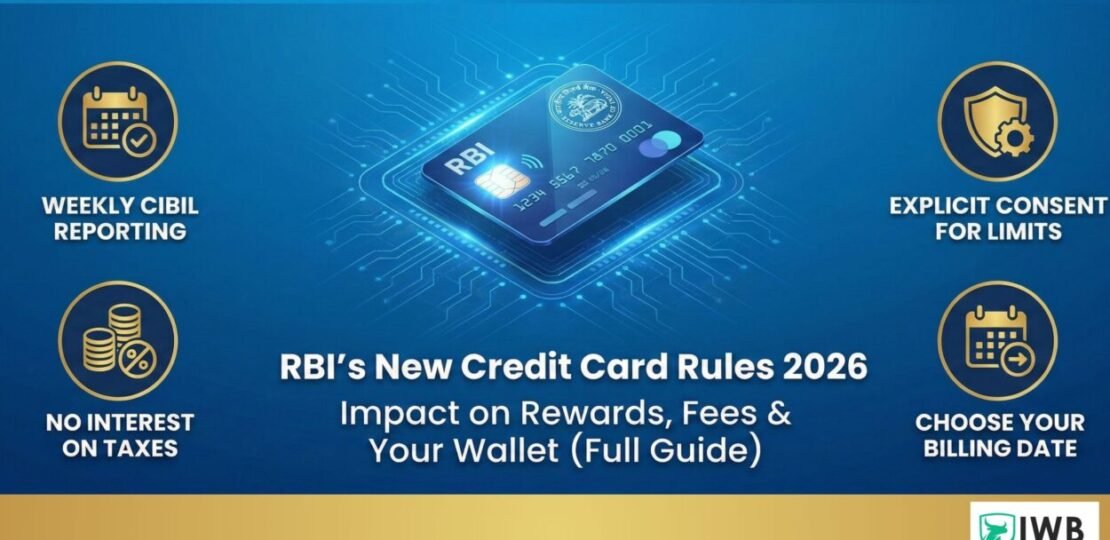
In 2026, the Indian credit card landscape is undergoing its most significant regulatory reset in years. Between new RBI mandates on credit reporting and stricter transparency rules, your strategy for managing plastic money needs an immediate upgrade.
If you have been following our recent guides on salaried credit card picks, you know that timing your applications and payments is everything. But with these latest updates, the “lag time” we once relied on is disappearing.
1. Weekly CIBIL Updates: Your Score Moves Faster
The biggest shift is how often your financial data is reported. Previously, lenders updated your credit history once a month or every 15 days.
- The New Rule: Effective April 1, 2026, all banks and NBFCs must report borrower data to bureaus (like CIBIL) every week. Reporting happens on fixed dates: the 7th, 14th, 21st, 28th, and the last day of the month.
- What this means for you: If you miss a payment, the “hit” to your score will reflect within 7 days. Conversely, if you pay off a large balance, your credit health improves just as quickly.
- Pro-Tip: Keep your utilization below 30% at all times. In the old days, you could “max out” a card and pay it off before the month ended to hide the utilization. Now, that window is gone.
Internal Link Idea:Read our guide on how to maintain a 750+ CIBIL score for salaried professionals.
2. No More “Silent” Limit Hikes or Upgrades
Have you ever seen your credit limit increase or a “premium” card arrive in the mail without you asking? While it feels like a win, it often leads to overspending or unexpected annual fees.
- The New Rule: Banks can no longer increase your credit limit or “upgrade” your card variant (e.g., moving you from HDFC Millennia to Regalia Gold) without your explicit consent via OTP.
- The 30-Day Rule: If you receive a new card and don’t activate it within 30 days, the bank must seek OTP-based consent. If you refuse, they must close the card within 7 working days at no cost to you.
3. Fair Interest: No More “Tax on Tax”
The RBI has cracked down on how interest is calculated for those who don’t pay their full bill.
- The New Rule: Interest can now only be charged on the actual principal amount outstanding. Banks are strictly forbidden from charging interest on unpaid GST, late fees, or other levies.
- Why it matters: This prevents the “debt spiral” where your balance grows faster than you can pay it off because of compounding taxes.
Summary Table: Latest Rule Changes at a Glance
| Feature | Old Practice | New Standard |
| Credit Reporting | 15 to 30 Days | Every 7 Days |
| Limit Increases | Automatic/Implied | Requires OTP Consent |
| Interest Base | Principal + Fees + GST | Principal Amount Only |
| Billing Cycle | Fixed by Bank | User Can Choose Date |
| Grace Period | Discretionary | Mandatory 3-Day Window |
4. You Pick Your Billing Date (Sync with Salary)
Most people have their credit card due date in the middle of the month, even though their salary arrives on the 1st.
- The New Rule: Every cardholder has a one-time right to change their billing cycle to any date of their choice.
- Strategy: Set your statement date for the 2nd of the month. This usually puts your due date around the 22nd, giving you plenty of time to pay using your fresh salary.
5. Security: Tokenization is Now Standard
When you save your card on Amazon, Zomato, or Swiggy, the merchant no longer stores your 16-digit card number.
- The Process: Merchants use a “Token”—a unique digital ID. In 2026, this is mandatory for all online, point-of-sale, and in-app transactions.
- The Benefit: Even if a website is hacked, your actual card details remain safe.
View the Official RBI Master Direction on Credit and Debit Cards for the full technical breakdown.
Frequently Asked Questions (FAQs)
Is there still a 3-day grace period for payments?
Yes. RBI rules state banks cannot charge a late fee or report you to CIBIL as long as you pay within 3 days of the due date. However, interest still accrues from the original due date, so don’t make it a habit!
Can a bank charge an annual fee if I don’t activate the card?
If a card is not activated within 30 days of being issued, the bank must close it at no cost to you. They cannot charge a joining fee without your explicit activation.
Where can I see the official guidelines?
You can view the latest updates directly on the RBI Official Website.

Amit Sharma is the Lead Analyst at Invest With Bull, leveraging 11 years of market experience to simplify personal finance for salaried professionals. From mastering credit card arbitrage and navigating personal loans to structuring robust retirement and FIRE (Financial Independence, Retire Early) strategies, Amit provides data-backed, actionable analysis. His mission is to cut through complex banking jargon and deliver the unbiased research you need to achieve absolute financial freedom.
RELATED POSTS
View all


SBI Cashback Credit Card: Unlock Amazing Cashback Benefits
Last Updated: 12/05/2025 | by Amit Sharma


The Ultimate Guide: Best UPI RuPay Credit Cards for Salaried Professionals in India (January 2026)
Last Updated: 20/02/2026 | by Amit Sharma
