



Here is a comprehensive, highly detailed pillar article designed to serve as the ultimate hub for your real estate website.
This guide is heavily optimized for AI Overviews (SGE) using a clear “TL;DR” structure, bullet points, and high-value tables. It is GEO-optimized for the Indian real estate market (covering RERA, GST, Stamp Duty, and Indian legal frameworks) and naturally incorporates long-tail keywords throughout the text.
Ultimate Step-by-Step Guide to Buying a House in India
URL Slug: /home-buying-guide-india
Meta Description: Discover the ultimate step-by-step guide to buying a house in India. Learn about RERA, home loans, hidden costs, legal documents, and registration in this complete handbook for first-time homebuyers.
🤖 AI Overview Summary: How to Buy a House in India
If you are looking for a quick breakdown of the step-by-step process of buying a flat in India, here is your executive summary:
- Assess Financial Readiness: Calculate your budget, including a 10-20% down payment and hidden costs like stamp duty, GST, and registration.
- Pre-Approve Your Home Loan: Check your CIBIL score and secure a pre-approved home loan to understand your exact purchasing power.
- Property Search: Decide between under-construction vs. ready-to-move properties, and shortlist locations based on infrastructure and connectivity.
- Legal Due Diligence: Only shortlist RERA-registered properties. Verify the title deed, Encumbrance Certificate (EC), and building approvals.
- Finalize the Deal: Pay the token amount, sign the Agreement to Sale, and process your home loan disbursement.
- Registration and Possession: Pay stamp duty, register the property at the Sub-Registrar’s office, and complete a thorough possession checklist before moving in.
Introduction: The Indian Homebuyer’s Journey
Buying a house in India is more than just a financial transaction; it is an emotional milestone. Whether you are searching for the best residential projects in Bangalore, an affordable flat in Pune, or a luxury builder floor in Delhi NCR, the Indian real estate market offers endless opportunities. However, it can also be a labyrinth of legal jargon, hidden costs, and complex paperwork.
For a first-time homebuyer, questions like “what are the legal documents to check before buying a flat?” or “how to apply for a home loan in India?” can feel overwhelming. Since the implementation of the Real Estate (Regulation and Development) Act, 2016 (RERA), the market has become highly regulated and buyer-friendly.
This ultimate step-by-step guide to buying a house in India is your roadmap. We will walk you through everything from budgeting and securing a home loan to legal due diligence and receiving the keys to your dream home.
(Note: Bookmark this page! We regularly update this hub with links to our specialized cluster articles for deeper dives into specific topics).
Phase 1: Financial Readiness & Budgeting
Before you start scrolling through property portals, you need to establish a rock-solid financial foundation. Understanding how to calculate a budget for buying a house in India is the crucial first step.
1. The Down Payment Calculation
In India, the Reserve Bank of India (RBI) mandates that banks can fund a maximum of 80% to 90% of the property’s value. This means you must arrange the remaining 10% to 20% out of your own pocket.
- Property value up to ₹30 Lakhs: Banks can fund up to 90%.
- Property value between ₹30 Lakhs and ₹75 Lakhs: Banks fund up to 80%.
- Property value above ₹75 Lakhs: Banks fund up to 75%.
Expert Tip: Aim to pay at least 20% as a down payment. The higher your down payment, the lower your Equated Monthly Installment (EMI) and total interest burden.
2. The 40% EMI-to-Income Rule
How much EMI can you afford? A golden rule of personal finance is that your total monthly debt obligations (including the new home loan, car loans, and credit cards) should not exceed 40% to 50% of your net take-home salary.
3. Beware of the Hidden Costs of Buying a Flat
When looking at a property’s base price, remember that it is not the final amount you will pay. The hidden costs of buying property in India can inflate your budget by 10% to 20%. Ensure you account for:
- Stamp Duty and Registration: Varies by state (usually 5% to 7% for stamp duty and 1% for registration).
- GST (Goods and Services Tax): Applicable only on under-construction properties. It is 1% for affordable housing and 5% for other residential properties. Ready-to-move properties with an Occupancy Certificate (OC) are exempt from GST.
- Brokerage/Agency Fees: Usually 1% to 2% of the property value if you use a real estate agent.
- Preferential Location Charges (PLC): Extra charges for units with a park view, pool view, or higher floors.
- Corpus Fund & Maintenance Deposit: Builders usually collect 1 to 2 years of maintenance charges in advance, plus a sinking fund contribution.
- Utility Connections: Fees for electricity meter installation, water connection, and gas pipelines.
How to Calculate the Hidden Costs of Buying a Flat in India (Publishing soon)
Phase 2: Property Search & Selection
With a clear budget, you can begin the exciting part: finding your home. Choosing the right location to buy property dictates not just your lifestyle, but also the future return on investment (ROI).
1. Identify Your Property Type
The Indian real estate market offers several property types, each suited to different buyer profiles:
- High-Rise Apartments/Flats: Best for amenities, security, and community living. Highly popular in metros like Mumbai, Bengaluru, and Noida.
- Builder Floors: Independent floors in a low-rise building. Great for privacy and higher undivided share of land (UDS). Common in Delhi, Gurgaon, and Chennai.
- Villas/Row Houses: Premium, independent living within a gated community.
- Plots/Land: Best for pure investment or custom-building a house later.
2. Ready-to-Move vs. Under-Construction Flats
One of the most common dilemmas for buyers is choosing the stage of construction. Here is a quick comparison to help you decide:
| Feature | Ready-to-Move Property | Under-Construction Property |
| Price | Generally 10-20% higher | More affordable; potential for high appreciation |
| GST | Exempt (0% GST) | 1% or 5% depending on the housing category |
| Risk | Zero risk of project delay | Moderate risk (Mitigated if registered under RERA) |
| Tax Benefits | Can claim home loan tax benefits immediately | Tax benefits claimable only after possession |
| Customization | What you see is what you get | Often allows for minor layout modifications |
3. Location and Infrastructure
When evaluating how to choose the right location to buy a house, look beyond the immediate surroundings.
- Connectivity: Proximity to metro stations, highways, and major arterial roads.
- Social Infrastructure: Distance to reputed schools, hospitals, supermarkets, and entertainment hubs.
- Future Development: Check state government master plans for upcoming airports, IT parks, or expressways that could trigger property price appreciation.
🔗 Cluster Link: Ready to Move vs Under Construction: Which is Better for You? (Publishing soon)
Phase 3: Legal Due Diligence & RERA Verification
Real estate fraud is a genuine concern, but meticulous legal verification can keep your investment 100% safe. Do not skip this step, and always hire a specialized property lawyer.
1. The Non-Negotiable: RERA Registration
What is a RERA registered property? Since 2016, it is mandatory for all commercial and residential real estate projects with land over 500 square meters, or eight apartments, to register with the state’s Real Estate Regulatory Authority (RERA).
- Why it matters: RERA ensures builder transparency, strict delivery timelines, and standardizes the calculation of “Carpet Area.” Never invest in an under-construction project that lacks a valid RERA registration number.
2. Crucial Legal Documents to Check Before Buying a Flat
Ask the builder or seller for the following documents and have them vetted by your lawyer:
- Title Deed: Ensures the seller has the legal right to sell the property. The title should be clear, marketable, and free of disputes.
- Encumbrance Certificate (EC): Issued by the Sub-Registrar, this proves the property is free from legal or financial liabilities (like an uncleared mortgage).
- Approved Building Plan: Ensure the local municipal authority (e.g., BBMP, BMC, DDA) has approved the layout. Unauthorized extra floors can lead to demolition.
- Commencement Certificate (CC): Required for under-construction properties, proving the builder has clearance to start building.
- Occupancy Certificate (OC): For ready-to-move properties, this certifies the building was constructed per approved plans and is safe for habitation. Without an OC, utility connections can be denied, and the property is technically illegal to occupy.
- Khata / Patta Certificate: An essential revenue document denoting the person liable to pay property tax.
🔗 Cluster Link: The Complete Legal Checklist for Buying Property in India (Publishing soon)
Phase 4: Securing a Home Loan
Unless you are making a 100% cash purchase, securing financing is the next major hurdle. Understanding the best home loan process for first-time buyers will save you money and stress.
1. Check Your CIBIL Score
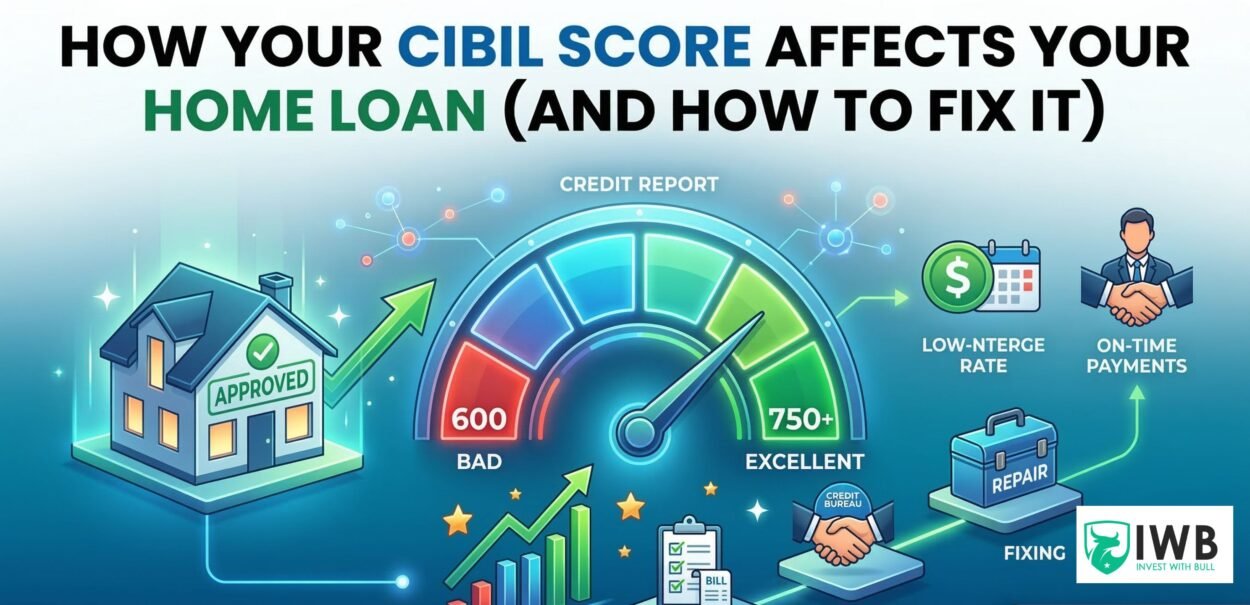
Your credit score (CIBIL score) determines whether your loan is approved and at what interest rate. A score of 750 and above is considered excellent and will fetch you the lowest interest rates from major banks like SBI, HDFC, and ICICI.
2. Types of Interest Rates
- Fixed-Rate Home Loan: The interest rate remains constant throughout the loan tenure. Good if rates are historically low, but usually comes with a premium.
- Floating-Rate Home Loan (Repo Rate Linked): The interest rate fluctuates based on the RBI’s repo rate. This is currently the most popular and transparent option in India.
3. The Home Loan Application Process
- Submit Documents: You will need KYC documents, last 6 months’ salary slips, Form 16, IT returns for 2-3 years, and bank statements.
- Pre-Approval: The bank assesses your financial health and grants a “sanction letter” stating the maximum loan amount you are eligible for.
- Property Evaluation: Once you finalize a property, the bank will send legal and technical teams to verify the property’s documents and physical status.
- Disbursement: After verification, the bank disburses the loan amount either directly to the seller (for ready properties) or in tranches based on construction stages (for under-construction).
4. Maximizing Tax Benefits on Home Loans
The Indian Income Tax Act offers lucrative benefits for homebuyers:
- Section 80C: Deduction up to ₹1.5 Lakhs per annum on the principal repayment. Stamp duty and registration charges can also be claimed here in the year of purchase.
- Section 24(b): Deduction up to ₹2 Lakhs per annum on the interest paid for a self-occupied property.
🔗 Cluster Link: Mastering the Home Loan Process: Eligibility, Rates, and Tax Benefits (Publishing soon)
Phase 5: Finalizing the Deal & Registration
You have found the house, the lawyer has cleared the documents, and the bank has sanctioned the loan. It’s time to seal the deal.
1. Paying the Token Amount
To take the property off the market, you will pay a token amount (usually ₹1 Lakh to ₹5 Lakhs). Ensure you get a signed receipt.
Pro Tip: Have a clear written understanding that the token amount is refundable if the property’s legal checks fail or if your home loan gets rejected.
2. Agreement to Sale (ATS)
The Agreement to Sale is a crucial document detailing the terms and conditions of the transaction, payment schedules, penalty clauses, and possession date. Both buyer and seller sign this, and you typically pay 10% to 20% of the property value at this stage.
3. Property Registration Process in India
Property registration is the legal transfer of ownership. It falls under the Indian Registration Act, 1908.
- Step 1: Pay the Stamp Duty. This can be done via non-judicial stamp paper, franking, or e-stamping (the most common method today). Keep in mind that many states offer a 1% to 2% rebate on stamp duty if the property is registered in the name of a woman.
- Step 2: Draft the Sale Deed.
- Step 3: Book an appointment at the local Sub-Registrar of Assurances office.
- Step 4: The buyer, seller, and two witnesses must be physically present at the Sub-Registrar’s office with their original IDs to sign the documents and capture biometrics.
- Step 5: Collect the registered Sale Deed after a few days.
🔗 Cluster Link: How to Register Property in India: Stamp Duty and Legal Steps (Publishing soon)
Phase 6: Possession & Moving In
Receiving the keys is an incredible feeling, but your job isn’t quite done.
1. The Possession Checklist for New Flats
Before taking official handover and signing the possession letter, conduct a thorough inspection (known as a “snagging” list):
- Wall and Flooring: Check for cracks, uneven tiles, or damp patches.
- Electricals: Test all switchboards, plug points, and MCB panels.
- Plumbing: Check for leaks under sinks, flush performance, and ensure water pressure is adequate.
- Doors and Windows: Ensure they open smoothly and that locks function properly.
- Amenities: Verify that the promised amenities (clubhouse, parking spot, gym) are delivered.
2. Transfer of Utilities and Khata
Once you move in, initiate the process to transfer the electricity meter, water bill, and the property tax records (Khata transfer/Mutation) into your name. This officially registers you as the owner in the local municipal records.
Frequently Asked Questions (FAQs) for Indian Homebuyers
What is the ideal age to buy a house in India?
There is no “perfect” age, but buying in your late 20s or early 30s is popular in India. It gives you a longer working life to repay a 20-year home loan, making your monthly EMIs highly affordable.
Can NRIs buy property in India?
Yes, Non-Resident Indians (NRIs) and Persons of Indian Origin (PIOs) can freely purchase residential and commercial properties in India under FEMA regulations. However, they cannot purchase agricultural land, plantation property, or farmhouses without specific RBI approval.
What happens if a builder delays possession?
Under RERA, if a builder fails to deliver the property by the promised date, the buyer has the right to either withdraw from the project and claim a full refund with interest, or continue with the project and claim interest for every month of delay.
Is it mandatory to buy property insurance?
While not legally mandatory in India, it is highly recommended. Moreover, if you are taking a home loan, most banks will insist you buy property insurance to protect the structural integrity of the house against fires, earthquakes, and other natural disasters.
What is the difference between Carpet Area, Built-up Area, and Super Built-up Area?
Carpet Area: The actual usable floor space inside the walls of your apartment. RERA mandates that builders must quote prices based on carpet area.
Built-up Area: Carpet area + the thickness of the inner and outer walls + balcony space.
Super Built-up Area: Built-up area + your proportionate share of common areas like lobbies, staircases, and elevators.
Conclusion: Ready to Make Your Move?
Buying a house in India is an intricate process, but with the right knowledge, it becomes a highly rewarding journey. By securing your finances, heavily scrutinizing the legal documents, relying on RERA, and carefully navigating the registration process, you can safeguard your life savings and secure a beautiful home for your family.
Keep this guide handy as you move through your home-buying phases, and make sure to explore our cluster articles linked above for deep dives into specific topics.

RELATED POSTS
View all

How Your CIBIL Score Affects Your Home Loan (And How to Fix It)
March 15, 2026 | by Amit Sharma

Wonder Home Finance Home Loan Interest Rates 2026: The Complete Guide (No ITR Required)
March 17, 2024 | by Amit Sharma

Aavas Financiers: The Efficiency King of Housing Finance Poised for 2026 Growth
September 6, 2024 | by Amit Sharma